
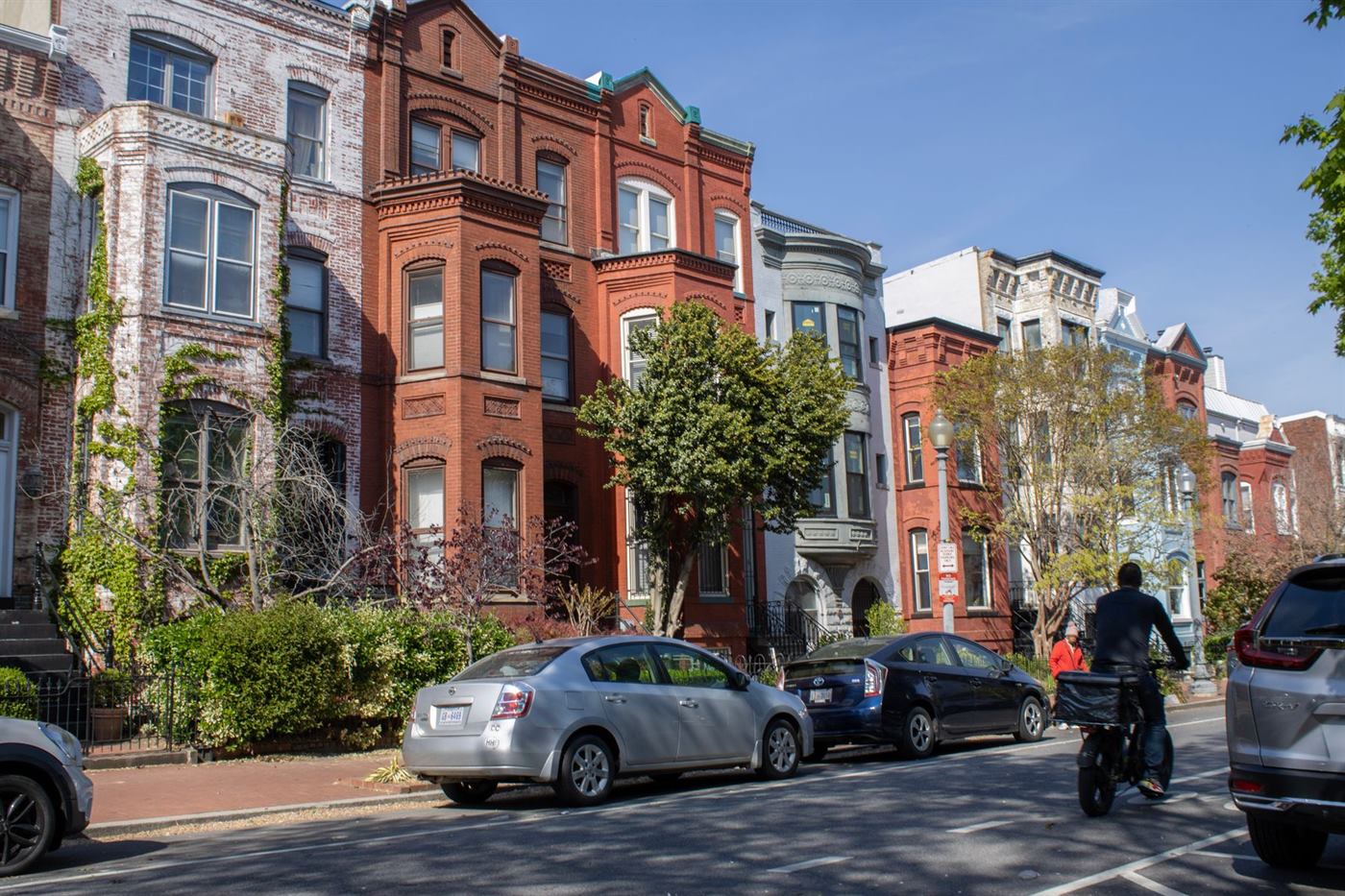
Junk removal in the District
Rowhouses, alleys, English basements, walk-ups and condo buildings — and the strictest disposal position of the three jurisdictions we work in. Here is what that actually means for your job.
The city’s transfer station will not take our truck
The District runs solid waste drop-off through its transfer stations, and the terms are unambiguous: Fort Totten serves DC residents only, on proof of residency, and accepts no commercial waste. The Benning Road Transfer Station has been temporarily closed, which leaves Fort Totten carrying the load.
The moment a truck is carrying somebody else’s material for payment, it is a commercial load. So no junk removal company — ours included — tips at Fort Totten. DC loads go to private facilities, and that cost is inside every honest DC quote you will be given.
Which leads to advice against our own interest: if you are a DC resident with a car and one or two items, take them yourself. Fort Totten accepts bulk items, trash, recycling and yard waste Tuesday to Friday 10am–2pm and Saturday 7am–2pm. Bring a DC driver’s license, or photo ID from another state plus a utility bill from the last 30 days, a lease or a deed. Children under 13 and pets stay in the vehicle.
Call us when that is not workable — when it is a whole basement, when there is no car, when it is up two flights, or when the wait does not fit the date you have to be out.
Haulers here are registered, and it is checkable
Every business, non-profit or government entity that collects or transports garbage, refuse, trash or recyclable material in the District counts as a solid waste collector, and has to register annually with the DPW Office of Waste Diversion under DC Official Code § 8-1031.05 and § 8-1031.06. Registration runs $50 per collector plus $50 per collection vehicle, and it sits on top of ordinary business licensing rather than replacing it.
It is worth knowing as a customer, because it is a real, verifiable thing to ask any hauler about before you let them into your house — in a trade where “licensed and insured” is otherwise printed on every van in the region and means whatever the printer was told.
The physical part
Rowhouse stairs
Narrow, often turned, sometimes with a low ceiling at the half-landing. A sectional that was carried in through a front door in one piece frequently cannot leave a basement the same way. Legs and backs come off; that is normal.
English basements
Below-grade units with their own entrance are everywhere here, and they are the best case: separate door, no stairs through anyone’s living room. Say if yours has one — it usually makes the job quicker and cheaper.
Rear alleys
DC blocks were laid out with service alleys, which is exactly what heavy loading wants. Where the alley is usable it beats the street every time. Where it is gated, blocked or too tight for a truck, we work off the front.
Permit parking
Residential permit blocks with no legal standing space slow a job down and can mean a longer carry. Give us the street name when you call and we will look at it before the day rather than circle on it.
Condo and apartment buildings
Freight elevator reservations and a certificate of insurance on file with management are common in the DC core. Both are arrangeable with notice and neither can be sorted on the doorstep.
Historic districts
Georgetown, Capitol Hill and the older northwest blocks combine the narrowest stairs with the tightest parking. Nothing about them is impossible; they just take longer and should be quoted that way.
Around the District
We work across all eight wards — Capitol Hill, Shaw, Petworth, Columbia Heights, Brookland, Anacostia, Georgetown, Adams Morgan, Navy Yard, Brightwood and everywhere between. Coming from Suitland, the south-east and north-east quadrants are the shortest runs, but the whole city is a normal working day.
If you are just over the line in Mount Rainier, Hyattsville, Takoma Park or Silver Spring, that is Maryland and a different set of rules — see the Maryland page.
Transfer station terms, hours and the collector registration requirement checked September 2026 against DC Department of Public Works published guidance. Confirm hours before driving anywhere — Benning Road’s closure in particular is described by DPW as temporary.
DC questions
Can you take my junk to the DC transfer station?
No, and neither can any other hauler. The Fort Totten Transfer Station is open to District residents with proof of residency and accepts no commercial waste. A junk removal truck is a commercial load the moment it is carrying somebody else's material, so our loads go to private facilities instead. You can use Fort Totten yourself with a DC license or a photo ID plus a recent utility bill, lease or deed.
Do junk haulers need a license to work in DC?
Yes. Anyone collecting or transporting waste in the District has to register annually with the DPW Office of Waste Diversion under DC Official Code sections 8-1031.05 and 8-1031.06, on top of ordinary business licensing. Registration is $50 per collector plus $50 per collection vehicle.
Where will the truck park on my street?
Usually the alley behind the house, which is what DC rowhouse blocks were built around and is far better than the street for carrying anything heavy. On blocks with no alley, or where the alley is blocked, we work off the street and plan for permit-parking restrictions in advance.
Can you get a sofa out of a DC basement?
Usually. English basements and below-grade kitchens are standard here, and so is a narrow turned staircase that a sectional will not come up in one piece. Mention the stairs when you call so the right amount of help arrives.
Send a photo and the street name
In the District those two things settle most of a quote: the photo sets the volume, the street tells us about the alley, the parking and the stairs. Text both to (978) 328-4523.