
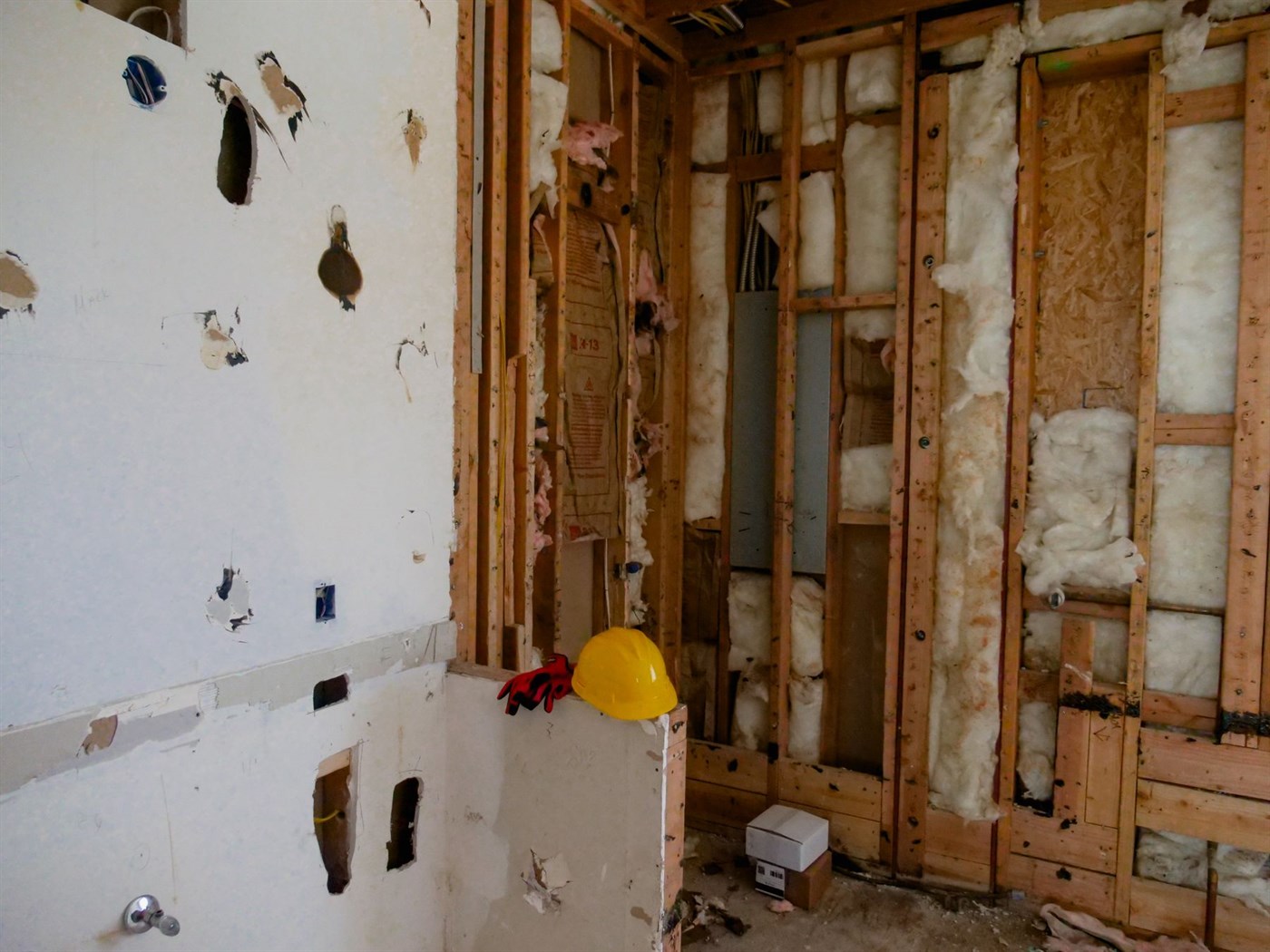
Debris off site, so the next trade can start
Drywall, lumber, old cabinets, countertops, flooring, tile, trim and fixtures. Cleared between phases rather than piled in the driveway until the end of the project.
Cheaper than a dumpster, for the right job
A roll-off makes sense when you are generating debris continuously for weeks. It makes much less sense on a single-bathroom gut, a kitchen strip-out or a basement finish, where the container sits mostly empty on the driveway, eats a parking space, and in DC and Arlington may need a permit to sit on the street at all.
The alternative is that somebody comes when the debris exists, loads it, and leaves. You pay for the volume that actually got produced instead of for the container size you guessed at.
Where a roll-off genuinely is the better answer, we will tell you that too.
C&D material has the strictest rules of anything we carry
General household junk can go to a lot of places. Construction and demolition debris cannot, and the rules are set separately by every jurisdiction in this region:
- Montgomery County will not accept shingles or roofing material of any kind at the Shady Grove Transfer Station
- Shady Grove also refuses Sunday loads over 500 lb, which reshapes weekend scheduling on a demo job
- Prince George’s County caps residents at one non-commercial pickup or trailer load of C&D material per year, and bans trailers and commercial-looking vehicles from its convenience centers
- Fairfax County requires haulers operating there to tip at county facilities; the FY2026 commercial rate is $90 per ton
- Fairfax charges a penalty of $166 per ton for loads that break facility rules — which is what a contaminated C&D load usually is
- Washington DC’s Fort Totten Transfer Station is residents-only and takes no commercial waste, so job-site debris never goes there
The practical consequence for a contractor is simple: the cheapest place to tip a load is often not the closest one, and a load that is mixed wrong gets turned away at the gate after the drive. Sorting on site costs less than being refused.
Checked September 2026 against Montgomery County DEP, Prince George’s County, Fairfax County DPWES and DC DPW published guidance. Rates are reviewed annually — confirm current figures before budgeting.
What we will and will not take off a site
Yes
Drywall, lumber, trim, doors, cabinets, countertops, tile, carpet, laminate and hardwood flooring, subfloor, fixtures, sinks, tubs, toilets, old vanities, packaging and general site trash.
Ask first
Roofing and shingles — genuinely accepted in some jurisdictions and refused outright in others. Concrete, brick and masonry, which are heavy enough to be priced by weight rather than volume.
No
Asbestos, lead paint waste, solvents, adhesives, fuel, and anything else that needs a licensed abatement contractor. We are not that, and a junk truck is not where that material belongs.
Tell us the site and the schedule
Repeat pulls on a longer job are easier to price than a one-off, and easier to schedule around your trades. Tell us where the site is, what the material is, and how often it needs clearing.
Call or text (978) 328-4523 — a photo of the pile is usually enough to price it.